
A stubborn knot between the shoulder blade and spine may trace back to the neck.
You know the spot. It sits along the inner edge of your shoulder blade, between the bone and your spine, usually on one side. You reach back to press it during a meeting. You lean into the corner of a door frame. You book another massage. By the next morning, it’s back, exactly where it was.
It’s one of the most common patterns Artuvate hears from its customers, and it’s part of the story behind a company that began with one woman and one simple question.
The Spot That Never Stays Gone
Most people treat a shoulder blade knot as a shoulder blade problem. That makes sense. It’s where you feel it, so it’s where you work on it. You buy a massage gun. You stretch. You see a chiropractor. You lie on a tennis ball on the floor. Each of these helps for a while, and then the tension comes back.
Artuvate’s customers describe it in their own words. “Massage, rubbing under my shoulder blade with the corner of a wall, they never work,” one wrote in a company survey. Another said, “I get Graston massage monthly if not more often, and the knots beneath my shoulder blades always come back.” A third kept it short: “A tight knot along the edge of my shoulder blade that I can’t get rid of.”
None of those efforts are wrong. But when relief keeps wearing off, it’s worth asking whether you’re working on the right place.
Why the Neck May Be Part of the Story
What many people don’t realize is that the nerves leaving the lower neck travel down to the area along the inner edge of the shoulder blade. For some people, pain felt there can be connected to the neck. That may explain why hours of rolling and rubbing the shoulder blade so often bring only short-lived relief.
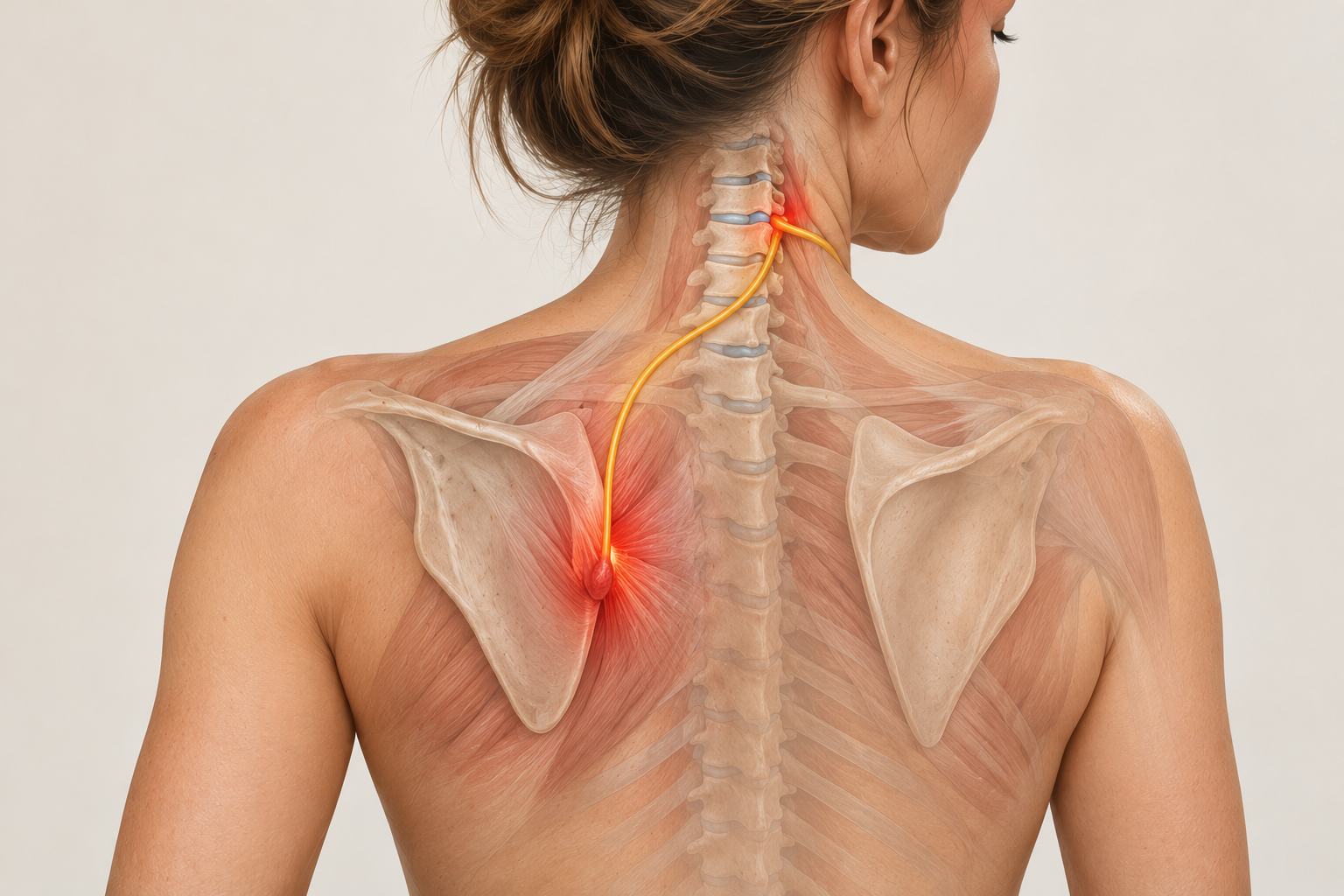
There’s a clue you can notice on your own. Your shoulder blade barely moves when you turn your head, but your neck does. If that knot flares when you check your blind spot while driving, or after a long day looking down at a screen, it’s worth paying attention to. It may be a sign that the source sits a little higher than the spot you keep pressing.
Artuvate invites every customer to answer a short survey after ordering, and tens of thousands have. About seven in ten describe pain spreading into the shoulder or shoulder blade. Two-thirds describe pressure at the base of the skull. Close to four in ten have lived with it for more than five years, and roughly one in four said they had come to accept it as a permanent part of life. Those numbers don’t prove what’s happening in any one person’s body, and a knot by the shoulder blade can have many causes.
That’s why a word of caution belongs here. Tingling, numbness, or weakness in the arm or hand deserves a doctor’s visit, especially if it’s getting worse or affects your grip. So does pain that keeps escalating. Sudden pain near the shoulder blade with chest pressure, shortness of breath, sweating, nausea, or lightheadedness needs emergency care right away. For people whose doctor has ruled out anything serious, the neck connection can be a useful new way to look at an old problem.
Where Artuvate Began
Artuvate started with the founder’s mother. For years she lived with neck pain that never fully went away, and her answer was almost always the same: another round of medication. Watching that, her son started asking a question. Was there anything she could do for herself, at home, besides reaching for a pill?
That question still shapes the company. Artuvate builds from what customers describe in their own words and from what clinicians observe. Dr. Eugene Lyons, PT, DPT, CSCS, an outpatient physical therapist with 13 years in orthopedics and spine care, has used the company’s flagship product with his patients and himself. [Disclosure, e.g. “Dr. Lyons has received product from Artuvate.” / “Dr. Lyons is a paid advisor to Artuvate.”] He points out that much of what physical therapy teaches about neck strength and mobility happens while you’re active, and he sees a place for something that supports the neck while the body is at rest.
One Device Instead of a Drawer Full of Fixes
Most people who live with neck tension own a heating pad, a massage gun, a special pillow, and maybe a neck stretcher. Each one does one thing, and most people use them one at a time, if they use them at all.
FisioRest was built around a different idea. It’s a contoured neck rest you lie back on at home, and it goes under the neck, not under the shoulder blade or the back. In one session, it combines gentle traction-style support along the neck’s natural curve with heat and vibration massage at the base of the skull and upper neck.
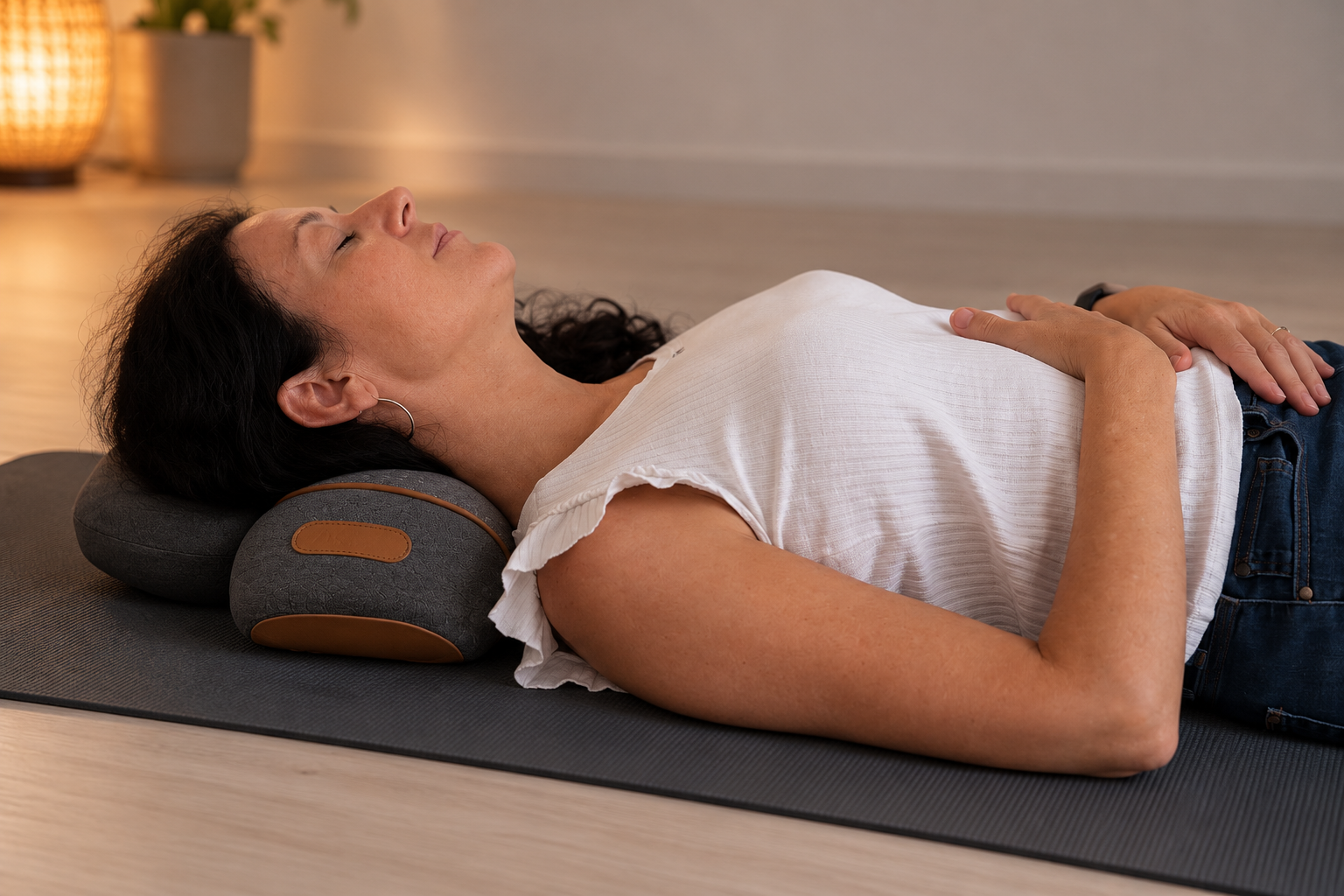
Comfort was the other priority. “Most of the people we talk to already own a heating pad, a massage gun, and a special pillow, and they use them one at a time,” the founder said. “We wanted something you could lie back on for a few minutes that brings those together, and that’s comfortable enough that you’d actually reach for it at the end of a long day.”
A typical session lasts 15 to 30 minutes, usually in the evening. FisioRest isn’t a medical treatment and doesn’t replace one. It isn’t suitable for anyone who has recently had neck surgery, and people who are pregnant, have osteoporosis, or have a diagnosed spinal condition should check with their doctor first.
Trying It on Your Own Terms
What helps one person’s neck may not help another’s, and the company doesn’t pretend otherwise. Every FisioRest comes with a 365-day trial at home and a two-year warranty, so people can use it in their own routine and decide for themselves whether it earns a place in their evening.
If you’ve spent years treating the spot where you feel the pain and the relief keeps slipping away, it may be worth looking a little higher.
Learn More About Artuvate
For more information about FisioRest and Artuvate’s approach to at-home neck comfort, visit artuvate.co.

Women’s Reporter Contributor
Covers wellness, personal development, culture, and the changing ways women approach work and life.
This article features partner, contributor, or branded content from a third party. Members of the Women’s Reporter editorial staff were not involved in the creation of this content. All views and opinions are those of the contributor alone.
You may also like

Vestir Is Redefining How Women Discover And Shop Luxury Fashion
Samka Keranovic and the Founder Story Behind Desert Roots Wellness


GinaTheFashionista Expands To Closet Finds
Kandé Takes Nigerian Modest Luxury To London


The Feline Soul Reader: Indrani Das on Healing
Mindset Magic™ And The Shift That Takes Weight Loss Beyond Willpower