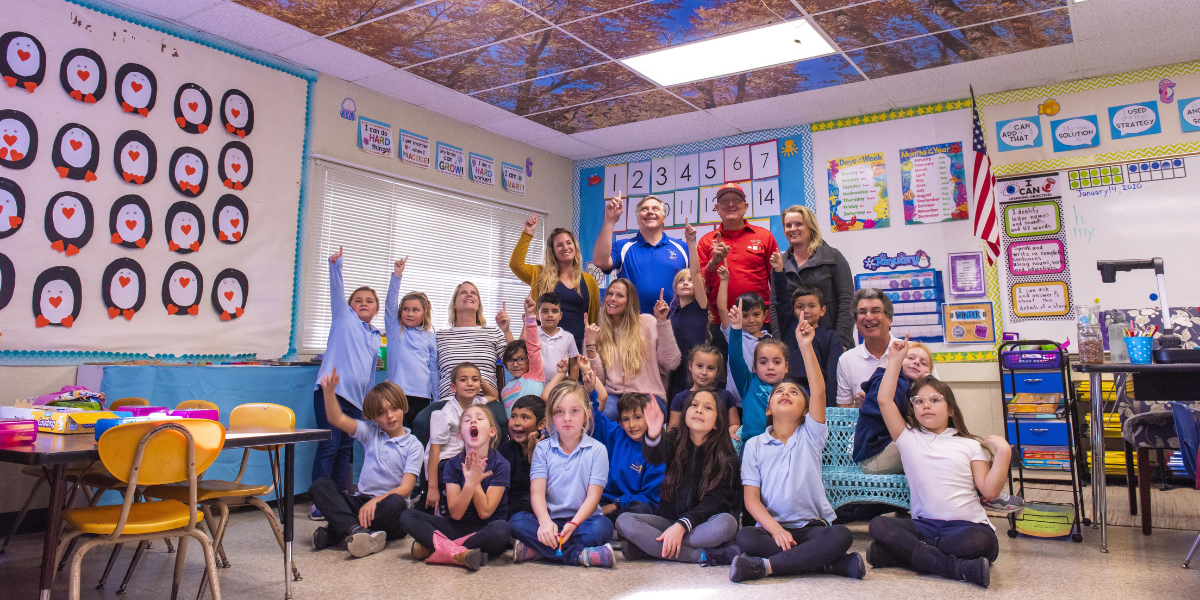
Nature In The Classroom installs tree canopy ceilings in schools, introducing nature-inspired design that supports focus, calm, and engagement.
On a typical school morning, the classroom hums with activity. Students settle into their seats, conversations taper off, and the day begins to take shape. In some classrooms, however, a subtle difference changes the atmosphere. Instead of plain ceilings or fluorescent panels, students look up to see a canopy of trees stretching overhead. Branches extend across the ceiling, and the visual presence of nature becomes part of the learning space.
This concept is central to Nature In The Classroom, a nonprofit founded by Ernesto Rodriguez. The organization focuses on introducing tree canopy ceiling murals into classrooms as a way to rethink how physical environments influence the learning experience. What began as an idea has developed into a growing initiative adopted by schools seeking to enhance classroom environments in a simple and visually engaging way.
The Concept Behind The Design
Nature In The Classroom draws inspiration from Attention Restoration Theory, a concept explored in environmental psychology. This theory suggests that exposure to natural elements may support mental clarity and reduce cognitive fatigue. While the theory is often associated with outdoor environments, the organization applies the concept through indoor visual design.
Rather than requiring changes to curriculum or daily routines, the installations are designed to function as a passive element within the classroom. The goal is to introduce a visual environment that differs from traditional classroom settings, where ceilings are typically neutral and functional.
Rodriguez identified an opportunity to bring this concept into everyday learning spaces. By placing tree canopy imagery overhead, the organization offers schools an alternative way to incorporate nature-inspired elements without requiring structural changes or outdoor access.
 Experiences From Educators And Students
Feedback from classrooms where installations have been introduced highlights how the visual changes are perceived by those in the environment. Teachers and students often describe the atmosphere as different from traditional classroom settings.
One middle school educator, Karyn Smolic, shared her observation: “I can already tell that by having the tree ceiling it has brought a sense of calmness and peace to the students seated underneath them.” While individual experiences vary, this type of feedback reflects how educators interpret the impact within their classrooms.
Students also express their impressions in their own ways. A kindergartner described the experience by saying, “It calms me up,” while a fifth-grade student shared, “The branches are like roads to a great journey.” These perspectives provide insight into how students engage with the visual environment.
A Mission Focused On Learning Environments
At its core, Nature In The Classroom is built on the idea that physical surroundings play a role in how students experience education. Traditional classrooms often prioritize functionality, with limited emphasis on environmental design. The organization’s approach introduces a visual element intended to complement existing learning structures.
By incorporating tree canopy imagery, the installations aim to create a setting that feels different from standard classroom environments. The presence of natural imagery can contribute to a distinct visual identity for each space, which educators may integrate into their teaching approaches if desired.
As a nonprofit organization, Nature In The Classroom focuses on expanding access to these installations across schools. Each project is developed with the intention of fitting into existing classrooms without requiring major adjustments to infrastructure.
A Different Approach To Classroom Design
What distinguishes Nature In The Classroom is its focus on ceilings as a design element. While classroom walls often feature educational materials or decorations, ceilings are typically underutilized. The organization’s approach shifts attention upward, transforming an overlooked surface into a central visual feature.
This design choice allows the installation to remain present without interfering with classroom activities. Because the murals are placed overhead, they do not compete with instructional materials or create additional distractions within the primary field of view.
Schools that implement the program are not changing how subjects are taught. Instead, they are adjusting the environment in which learning takes place. This distinction allows the installations to integrate into a wide range of educational settings, from elementary classrooms to middle and high school environments.
 Observations From Implementation
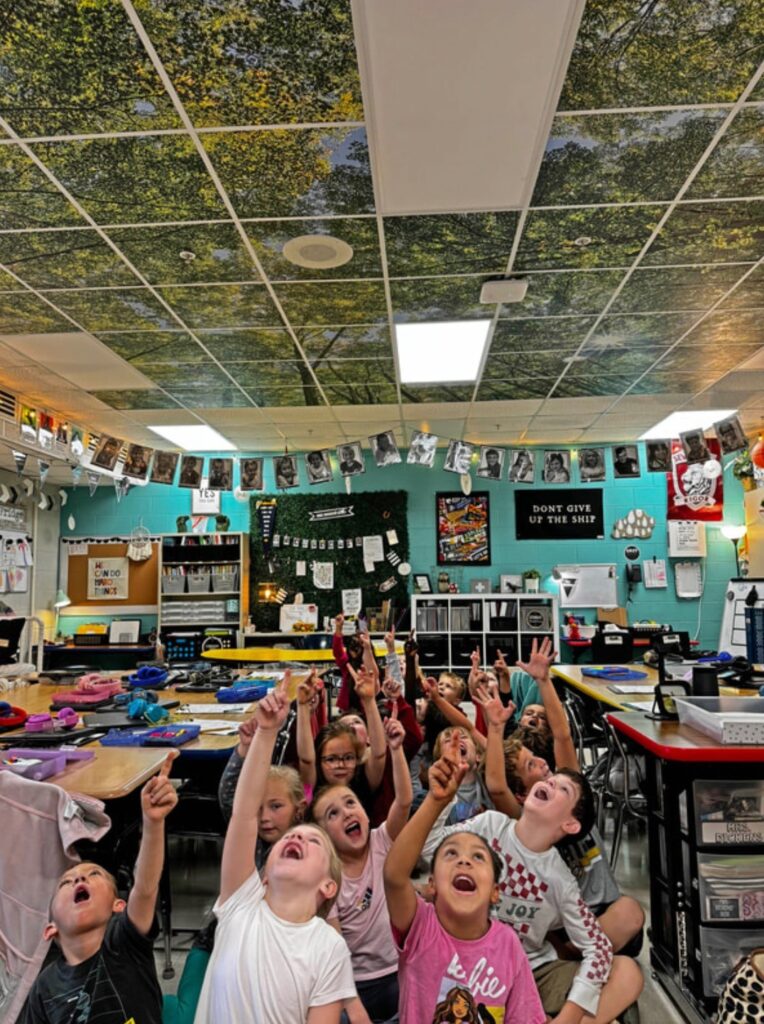 Observations From Implementation
Across different schools, the introduction of tree canopy ceilings has generated consistent feedback regarding the overall atmosphere of the classroom. Educators often describe the environment as more visually engaging compared to traditional designs.
While outcomes may vary depending on the classroom and student group, the installations provide a consistent visual element that remains present throughout the day. This continuity is one of the defining characteristics of the approach, as it does not rely on active participation or scheduled activities.
The simplicity of the installation process is also a key factor in its adoption. Schools are able to incorporate the design without introducing new systems or ongoing maintenance requirements beyond standard upkeep.
Looking Ahead
Nature In The Classroom reflects a broader shift in how learning environments are being considered. As schools explore ways to enhance student experiences, environmental design is becoming an area of increasing interest. The organization contributes to this conversation by offering a model that focuses on visual transformation rather than structural change.
Tree ceilings are now installed throughout 20 school districts across nine states, serving 10,000 plus students.
By introducing tree canopy ceilings, Nature In The Classroom provides an example of how small design adjustments can alter the perception of a space. For educators and administrators, this approach offers an additional option when considering how to shape classroom environments.
Those interested in learning more about the organization and its work can visit Nature in the Classroom. Additional updates and examples of installations are available on Ernesto Rodriguez (@natureintheclassroom) Instagram and Nature In the Classroom (@NatureInTheClassroom) • Facebook. For media features and published articles, visit Media and Articles – Nature in the Classroom.