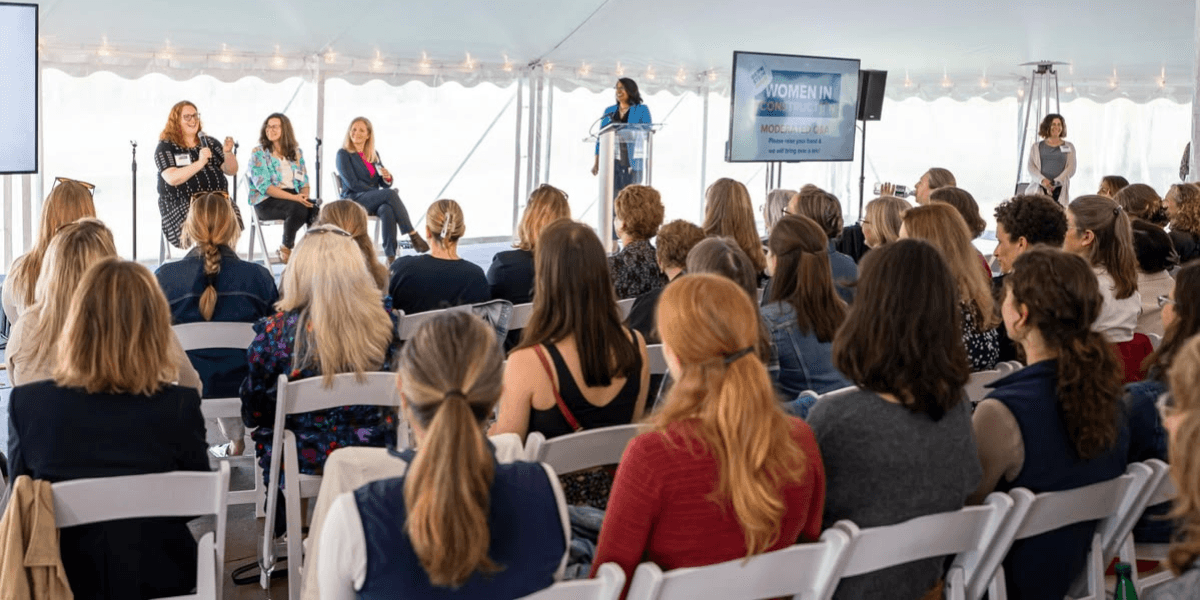
Women leaders from across the construction industry gathered in Reno, Nevada, for a national working session focused on workforce challenges, business operations and the future of an industry that continues to face pressure from labor shortages and changing market demands.
The National Association of Women in Construction's 2026 Construction Congress brought together more than 30 representatives from construction companies, industry organizations, research institutions, educational organizations and other parts of the sector. The invitation-only gathering was designed as a focused forum for senior professionals to discuss some of the industry's most pressing issues.
The event was particularly relevant to the growing role of women in construction, a sector historically dominated by men but increasingly dependent on a broader and more diverse workforce.
A Focus on Industry Challenges
Unlike a conventional conference centered primarily on presentations, the Construction Congress was structured as a working session. Participants were expected to exchange ideas, identify challenges and develop insights that could contribute to the wider construction community.
The discussions addressed business operations and issues affecting the industry's ability to attract and retain talent. Construction companies across the United States continue to navigate workforce demands as experienced employees retire and employers compete for skilled workers.
For women working in the sector, those challenges can also intersect with questions about recruitment, professional development, advancement and retention.
The Congress provided a setting where those issues could be discussed directly among industry professionals rather than treated solely as broader workforce statistics.
Women’s Growing Role in Construction
Construction remains an important part of the American economy, supporting residential development, commercial projects, infrastructure and specialized building work.
The industry has also been working to expand the participation of women at different levels, from field positions and skilled trades to engineering, project management, executive leadership and business ownership.
Organizations such as the National Association of Women in Construction have focused on increasing opportunities for women while helping companies understand the value of developing a wider talent pipeline.
The gathering in Reno placed those efforts within a broader business context. Increasing women's participation is not only a workforce issue but also a question of how companies build leadership teams and prepare for future labor needs.
Leadership and Business Strategy
The Congress also highlighted the connection between workforce development and business strategy.
Construction companies operate in an environment where project schedules, labor availability, material costs and financing can directly affect profitability. A shortage of qualified workers can delay projects and increase operating costs, while inadequate leadership development can make it harder for companies to replace experienced managers.
For that reason, discussions about retaining women in construction can have implications beyond workplace culture. They can affect succession planning, project management capacity and the industry's ability to maintain a reliable workforce.
The event's structure encouraged participants to examine those questions collectively and develop practical insights for the industry.
A Smaller Forum With a Broader Purpose
The Construction Congress was deliberately limited in size, with more than 30 participants representing prominent organizations and businesses. Its smaller format was intended to encourage candid discussion and collaboration.
The gathering also served as a precursor to the larger NAWIC Annual Conference, which brought together a wider construction audience in the same location.
The distinction between the two events was significant. While a large conference can provide education and networking opportunities across a broad audience, the Congress created a more concentrated environment for senior industry participants to work through specific challenges.
The results were expected to contribute to an industry feature and provide insights for the wider construction community.
Why the Event Matters
The construction sector's workforce needs are unlikely to be addressed by recruitment alone. Companies also need effective strategies for developing employees and creating pathways into leadership.
For women already working in construction, those pathways can influence whether experienced professionals remain in the sector and progress into senior positions.
The Reno gathering therefore represented more than a networking event. It provided an industry-level forum for examining how construction companies can respond to workforce and operational challenges while making better use of the talent already available.
The broader significance lies in the connection between inclusion and business capacity. As construction companies compete for skilled workers and prepare for future projects, expanding the pool of people who can enter, remain and advance in the industry becomes an increasingly practical business consideration.
The Construction Congress placed women in construction at the center of that conversation, giving industry leaders an opportunity to examine the challenges facing the sector and consider how collaboration could contribute to its next stage of development.

Women’s Reporter Contributor
Covers women in business, entrepreneurship, and career development.
This article features partner, contributor, or branded content from a third party. Members of the Women’s Reporter editorial staff were not involved in the creation of this content. All views and opinions are those of the contributor alone.
You may also like

From Nurse to Network Leader: Simone Herzog
Behind the Blueprint: The Firm Powering Behavioral Health Growth in All 50 States

From Clutter to Calm: How Jamie Wild Is Redefining Organization With Style and Confidence
California's IVF Insurance Rules Expand Coverage While Leaving Some Patients With Significant Costs


SasSea Wraps Rethinks the Hair Tie for Life in Motion
Scent of Yoga: Where Laws Follow Culture